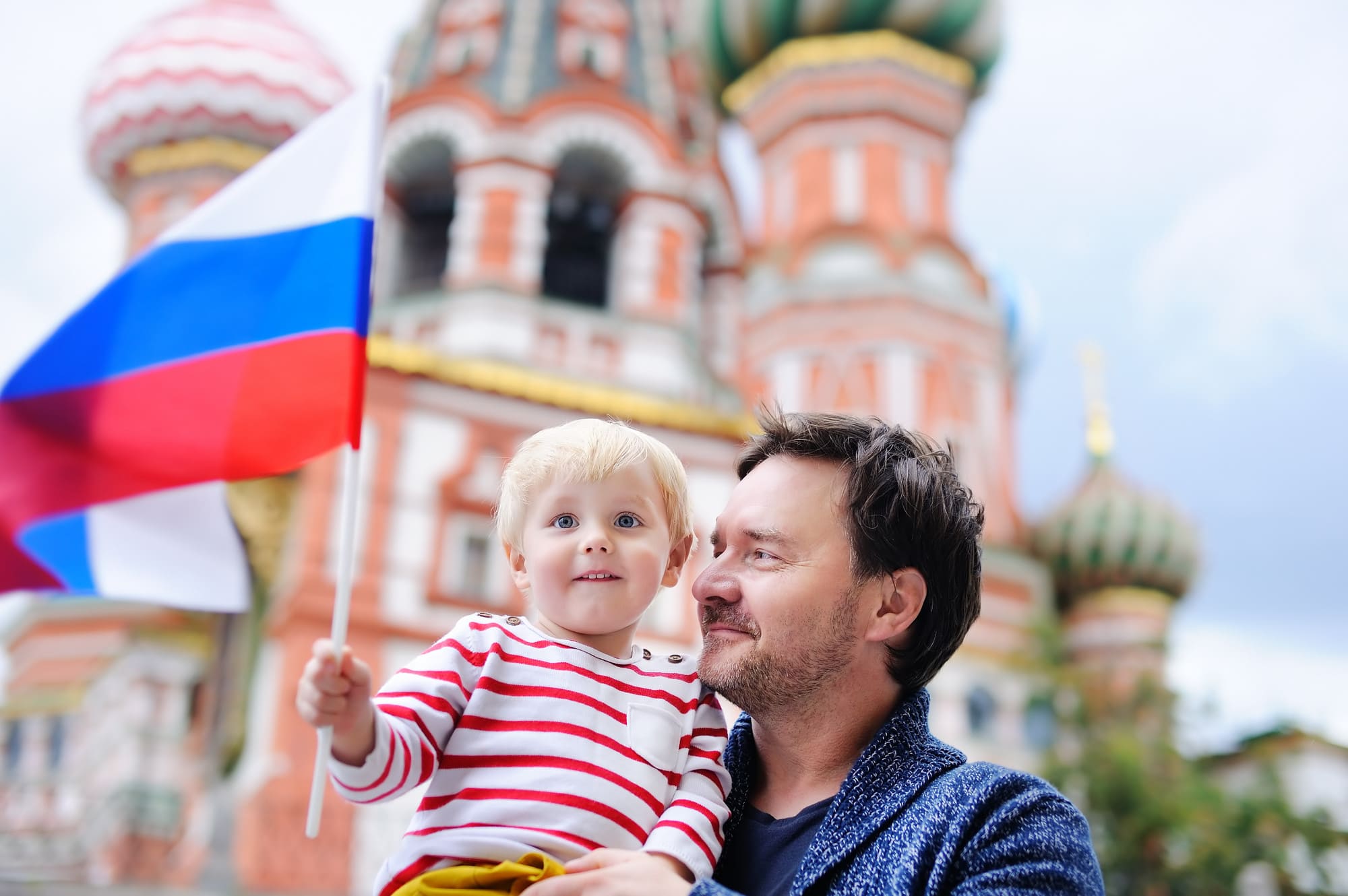
Russia is a country where the business calendar is closely intertwined with folk customs and church dates. January holidays can freeze logistics for a week and a half, and May holidays can break the supply chain at the height of the season. If you work with Russian suppliers or buyers, understanding local traditions and customs is not just cultural awareness, but a practical necessity.
This article will help you understand which holidays are celebrated in Russia, when the country rests, and which traditions and customs shape the everyday life of the Russian people. Knowing these things will make your cooperation with Russian partners noticeably more comfortable.
Official Holidays and Days Off in Russia
The production calendar in Russia includes several large blocks of non-working days established in the Labor Code. It is these that determine the rhythm of business life throughout the year.
Public holidays and days off are distributed as follows:
- January 1–8 — New Year holidays and Orthodox Christmas (January 7)
- February 23 — Defender of the Fatherland Day
- March 8 — International Women’s Day
- May 1 — Spring and Labor Day
- May 9 — Victory Day
- June 12 — Russia Day
- November 4 — National Unity Day
In addition, if a non-working holiday falls on a weekend, it is transferred to the nearest working day. The government annually approves a production calendar with exact transfer dates, and it is useful for a foreign partner to check it in advance.
The most impactful period for business is January. The country practically does not work during the first ten days of the month: banks, customs authorities, and logistics companies operate in limited mode. The second difficult period is the May holidays, when two short non-working blocks (May 1 and May 9) often merge with weekends into extended long weekends. Warehouses are closed, document flow stops, approvals are postponed.
New Year and Christmas: The Main Winter Holidays
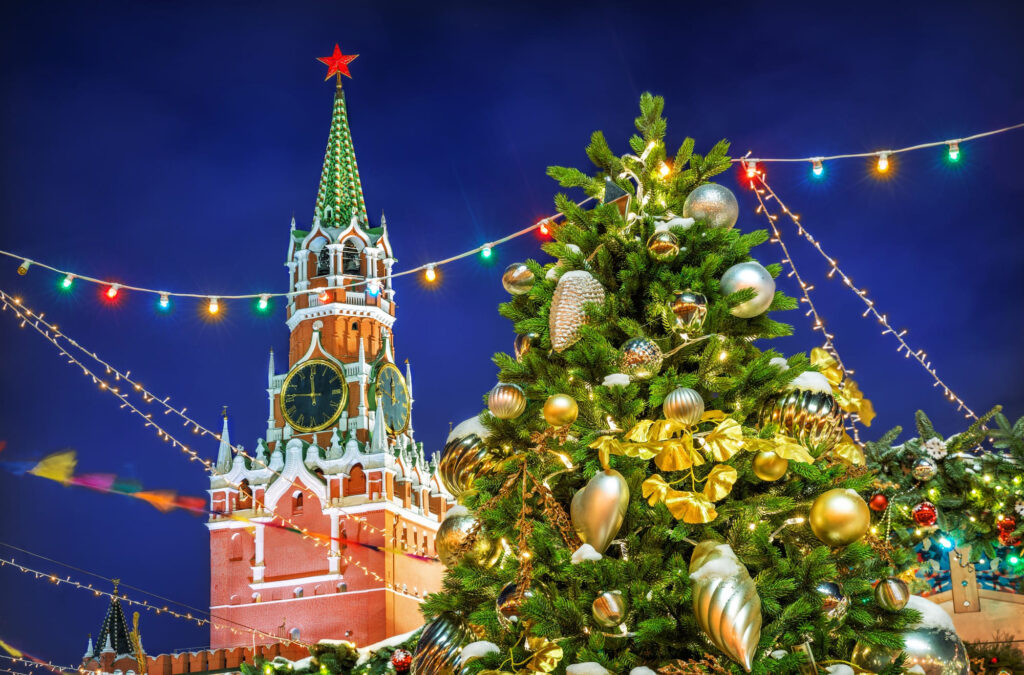
New Year is without exaggeration the main celebration in Russia. Preparations begin in December: cities are decorated with garlands, homes set up and decorate Christmas trees, and stores are filled with customers searching for gifts.
On December 31, the entire country gathers at the festive table. Traditional treats include Olivier salad, tangerines, herring under a fur coat, and of course, champagne. At exactly midnight, the chimes of the Spasskaya Tower of the Kremlin ring out — and with the clinking of glasses, the new year arrives. Ded Moroz (Grandfather Frost) and his granddaughter Snegurochka are the main characters of the holiday, especially for children. Children leave them letters with wishes, and in the morning find gifts under the tree.
New Year holidays last from January 1 to 8. Within this period, on January 7, Orthodox believers celebrate Orthodox Christmas — one of the most important church holidays. According to the Gregorian calendar, this date differs from Western Christmas, which falls on December 25. Christmas Eve — the evening of January 6 — is a time of quiet family meal. The table is served with kutya — a sweet porridge made from wheat or rice with honey and dried fruits. Churches hold solemn services, and in some cities they organize Christmas nativity scenes — small theatrical performances depicting the birth of Christ.
For a business partner, it is important to understand: from late December to January 9–10, Russia is practically unavailable for work communications. Contracts, payments, shipments — all of this is better completed before December 25 or planned for the second half of January.
Maslenitsa: Farewell to Winter and the Beginning of the Spring Season
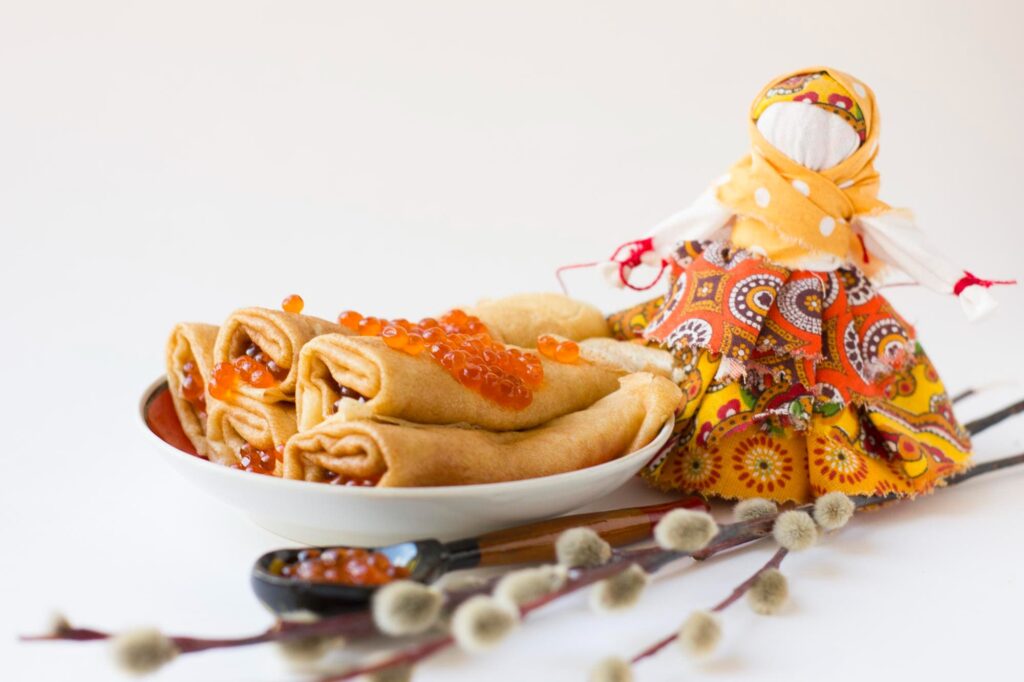
Maslenitsa is one of the most cheerful Russian holidays, whose roots go back to paganism. Ancient Slavs bid farewell to winter and welcomed spring with boisterous festivities. After the adoption of Christianity, this holiday was traditionally celebrated in the last week before Great Lent, which is why it is also called Cheese Week.
The date is floating — it depends on the date of Easter and usually falls at the end of February or the beginning of March. Celebrations last for a whole week, and each day has its own name. However, the main symbol remains unchanged — bliny (pancakes). During Maslenitsa, bliny were made everywhere: at home, at fairs, right on the street. The round hot blin symbolizes the sun, which gains strength after the long winter. Making bliny is a tradition that is still alive today.
The whole week is a time of grand festivities. Fairs are held in squares, along with sledding, fistfights, and tug-of-war. Children and adults have fun together — sleigh rides, round dances, competitions. In the evenings, bonfires were lit — fire was considered a symbol of renewal. The climax comes on Sunday: in the main square, the burning of the Maslenitsa effigy takes place — a straw figure symbolizing the departing winter. Round dances were performed around the bonfire — an echo of pagan rituals associated with the cult of the sun. Traces of paganism have been preserved in many spring and summer celebrations. After this, Great Lent begins, and until Easter itself, feasts give way to restraint.
For a foreign guest, the farewell to winter is an excellent opportunity to see Russia in its most joyful manifestation. Fairs, bliny with caviar and honey, hot tea, music — all of this creates an atmosphere that is hard to forget.
Easter: The Main Orthodox Holiday
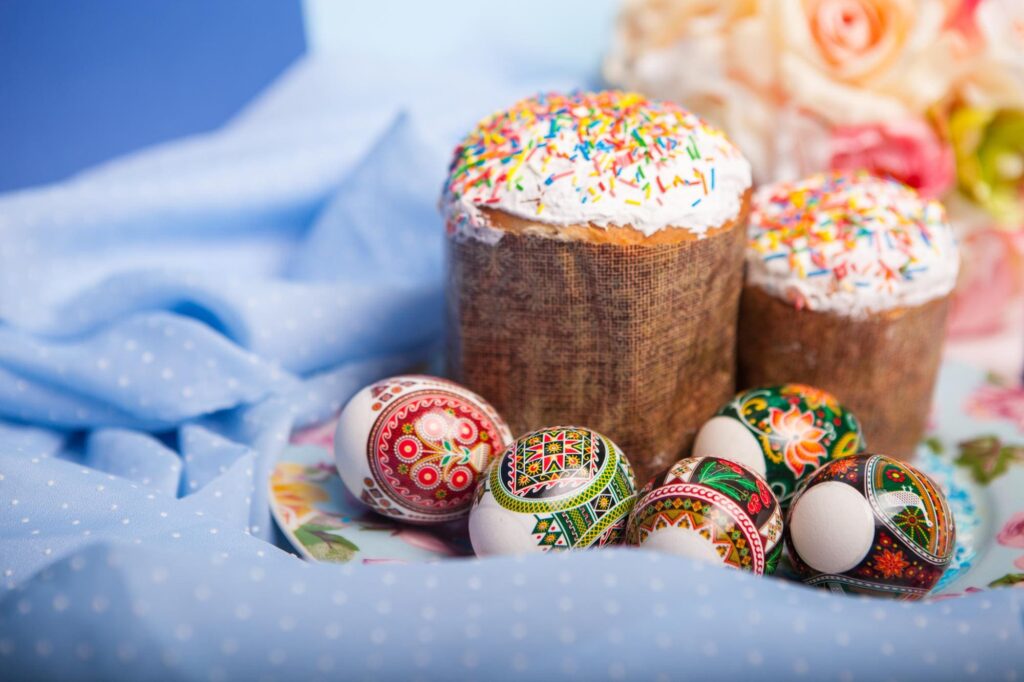
Easter, or the Bright Resurrection of Christ, is the most significant day for Orthodox believers in Russia. Its importance in Russian culture is difficult to overestimate: even those who are far from the church observe Easter customs and prepare the festive table.
The date changes every year — it is calculated according to the lunar calendar and falls in the period from late March to early May. The celebration is preceded by Great Lent, which lasts seven weeks. This is a time of abstinence and spiritual preparation. The last week — Holy Week — is the strictest. It is during these days that housewives begin to prepare the main treats: they bake kulich, make tvorog (cottage cheese) paskha, and dye eggs. Dyeing eggs is an ancient ritual dating back to early Christian times. The traditional color is red, symbolizing life and Resurrection, although today eggs of all colors of the rainbow surprise no one.
On the night from Saturday to Sunday, solemn services are held in churches. Believers consecrate kulich, eggs, and other treats — after the long fast, this is the first meal. In the morning, people greet each other with the words «Christ is Risen» — «Truly He is Risen,» kiss, and exchange Easter eggs. This ritual is called khristosovaniye.
One of the beautiful traditions is egg rolling. On a flat surface or a special slope, painted eggs are rolled, trying to knock down someone else’s. This is a game for both children and adults. There is also a belief: if someone’s egg doesn’t break the longest — its owner will have good luck.
The bright holiday of Easter lasts a whole week — Bright Week. During this time, it is customary to visit, treat loved ones, and rejoice in spring. The Sunday following Bright Week is called Krasnaya Gorka (Red Hill) — in folk tradition, this was a day of weddings and youth festivities. On Krasnaya Gorka, games, round dances, and matchmaking were held. According to legend, a wedding on Krasnaya Gorka promised a long and happy family life. This day is still considered one of the best for marriage.
Ivan Kupala and Other Folk Holidays of Summer
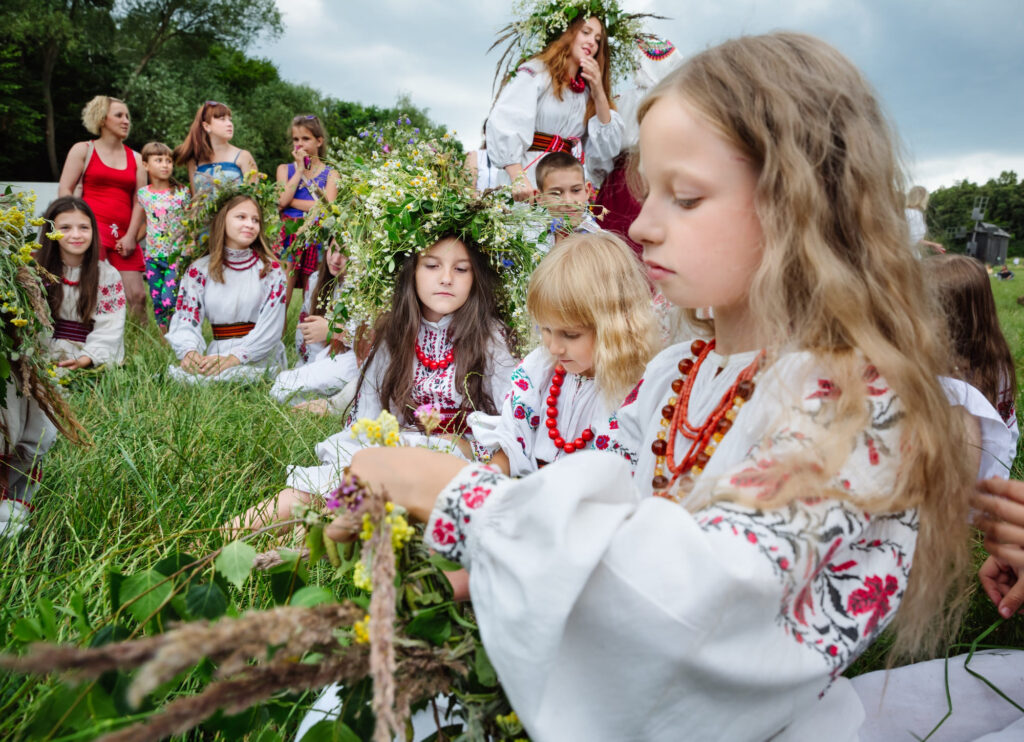
With the arrival of warmth, Russia celebrates holidays associated with nature, harvest, and ancient Slavic rituals. The most vivid of them is Ivan Kupala, which falls on July 7.
The holiday came to Rus from the depths of pre-Christian times and was originally associated with the summer solstice. Ancient Slavs believed that on this night nature is filled with special power: water acquires healing properties, and herbs acquire magical ones. Later, the celebration merged with the day of the Nativity of John the Baptist, but the pagan spirit of the rituals was preserved.
What did people do on Ivan Kupala? The customs of this day are associated with three elements — water, fire, and earth. Young people bathed in rivers and lakes: it was believed that on this night water cleanses from diseases and misfortunes. Large bonfires were lit on the shores, over which couples jumped — according to belief, if a couple jumps over the flame without letting go of their hands, they will have a strong union. Fire in pagan tradition was considered purifying — it burned away everything bad. Girls wove wreaths from wildflowers and set them adrift, fortune-telling about their betrothed. If the wreath floats far away — there will be a marriage soon.
In addition to Ivan Kupala, several dates closely connected with peasant life are celebrated in summer. Honey Spas (August 14) opens the honey harvesting season — on this day it is customary to consecrate honey in church and treat loved ones to it. Apple Spas (August 19) is the time when apples and other fruits of the new harvest are consecrated. Before this day, according to folk custom, apples were not supposed to be eaten. Apple Spas coincides with the church Transfiguration of the Lord. For rural Russia, it was an important milestone — after it, they began actively storing the harvest for winter. These dates remind us of times when the fertility of the land determined the well-being of the family for the whole year.
Svyatki and Epiphany: Winter Rituals and Traditions
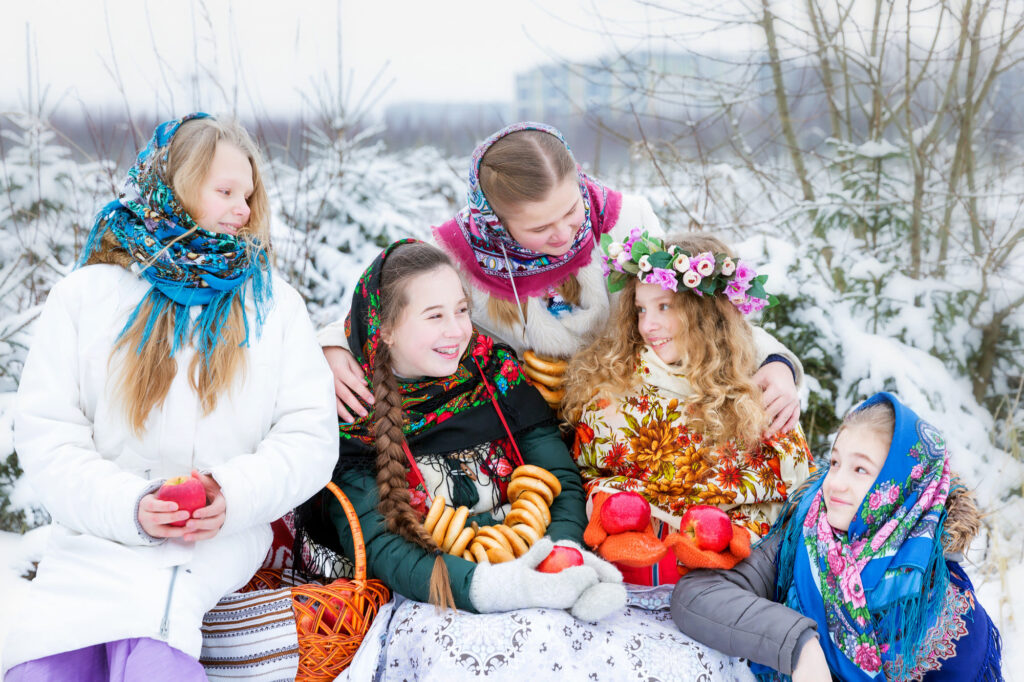
The period from Christmas (January 7) to the Epiphany of the Lord (January 19) is called Svyatki in folk tradition. These are twelve days filled with special rituals and customs.
In Rus, this was a time of joy and merriment. Young people went from house to house with kolyadki — songs praising the hosts and wishing them prosperity. Mummers — people in masks and unusual costumes — performed skits and joked, and the hosts treated them to gingerbread, pies, and sweets. In some villages, vertep were organized — puppet shows on biblical themes.
Svyatki fortune-telling is a separate and perhaps the most mysterious tradition of this period. Fortune-telling was customary primarily among girls. There were many methods: pouring wax into water, placing mirrors opposite each other, listening to sounds behind the door. According to signs and legends, it was during these nights that the future revealed itself most willingly.
This period ends with the Epiphany of the Lord — January 19. The Epiphany holiday commemorates the gospel event — the baptism of Jesus Christ in the waters of the Jordan. Along with the Epiphany came to Rus the tradition of dipping into an ice hole: a cross-shaped ice hole — iordan — is cut in bodies of water, and believers immerse themselves in icy water. The ritual requires considerable courage: January frosts in Russia are serious business. However, thousands of people participate annually, believing that holy water grants health and purification.
Epiphany water is kept at home all year. It is used to consecrate the dwelling and given to the sick to drink. According to folk belief, this water does not spoil and has special power. The holiday came to Rus from Byzantium and over time merged so tightly with local winter rituals that it is no longer possible to separate one from the other.
Russian Hospitality and Table Etiquette
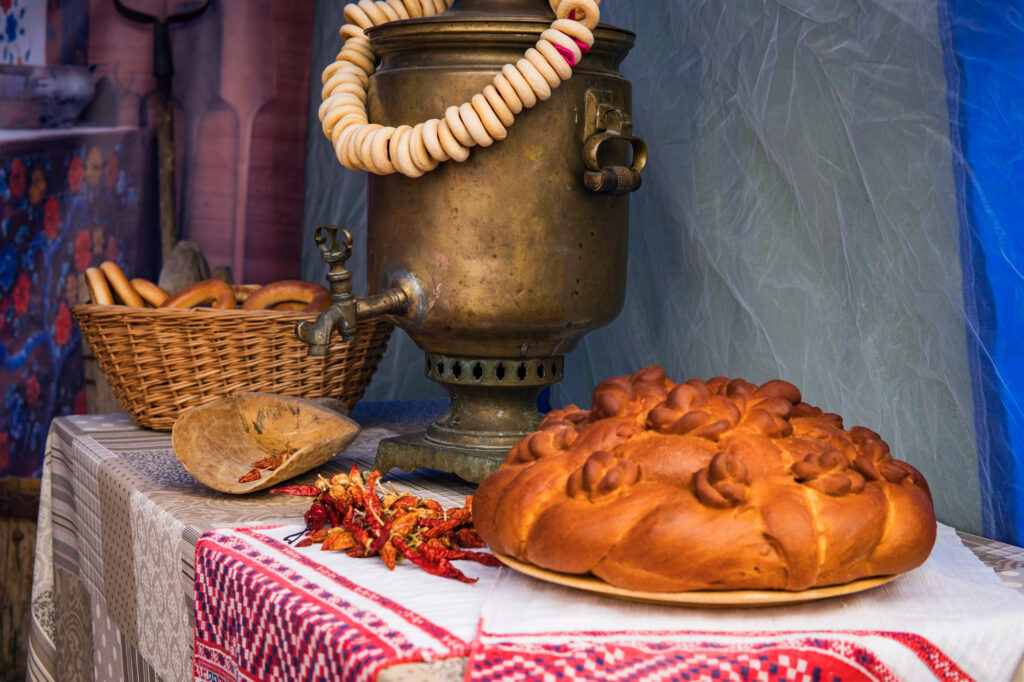
Hospitality is one of those traits that foreigners notice in Russia immediately. Meeting a guest with bread and salt is an ancient tradition that has survived to this day. A round loaf on an embroidered towel was presented to dear guests back in Rus, and this gesture is still alive at weddings, official receptions, and meetings of foreign delegations. To break off a piece of the loaf, dip it in salt, and eat — means to show respect to the hosts.
A Russian feast is not just food. It is a ritual of communication, coming together, building relationships. If a Russian partner has invited you home or to a restaurant — this is a sign of trust and goodwill. You should not refuse without a good reason: the hosts’ cordiality can turn into offense if the invitation is declined too easily.
At the table, there are unwritten rules. Hosts usually set the table with a generosity that may surprise: appetizers, hot dishes, pastries, drinks. The treats are abundant — in Russian tradition, an empty table was considered a bad sign. Toasts are an obligatory part of the feast. The first — usually for the meeting or for the health of the hosts. Skipping a toast is considered impolite, although no one forces you to drink to the bottom — it is enough to take a sip.
What should you bring to the hosts if you are invited as a guest? A universal gift is good wine, sweets, or a souvenir from your country. Flowers are also appropriate, but there is a superstition: give only an odd number. In Russia, an even number of flowers is brought to funerals and memorial services — it is better to know this in advance. By the way, many dates in Russia are traditionally celebrated at the table — both in joy and in sorrow.
For a foreign partner, a feast is an opportunity to see business people in an informal setting. It is often at the table that issues that were stalled in the meeting room get resolved. However, it is not customary to push business topics while visiting — let the conversation flow naturally.
Culinary Traditions: Karavay, Kvass, and the Festive Table
The festive table has always reflected the family’s prosperity, their attitude toward guests, and even the religious calendar. For each date — its own dishes, its own treats, its own customs.
Karavay is the main bread of Russian celebration. It was baked for weddings, to welcome dear guests, for housewarmings. Large, round, decorated with figures made of dough — karavay symbolized wealth. Meeting with bread and salt is a tradition that united all classes: both the peasant hut and the nobleman’s estate. Bread was valued — throwing it away was considered a sin.
Kvass is another symbol of the Russian table. This slightly sour refreshing drink made from rye bread has been known in Rus since ancient times. In the heat, kvass replaced both water and light food. On its basis, okroshka was prepared — a cold summer soup that is still loved throughout the country.
Russian cuisine is rich in dishes prepared for special dates. Shchi and pies are the everyday staples, but for celebrations, the table was decorated in a special way. For Maslenitsa — bliny with caviar, sour cream, and honey. For Easter, kulich is baked and tvorog paskha is made. On Christmas Eve, kutya is served — porridge with honey, nuts, and dried fruits. On Christmas, pies with various fillings are baked: meat, fish, cabbage, apples.
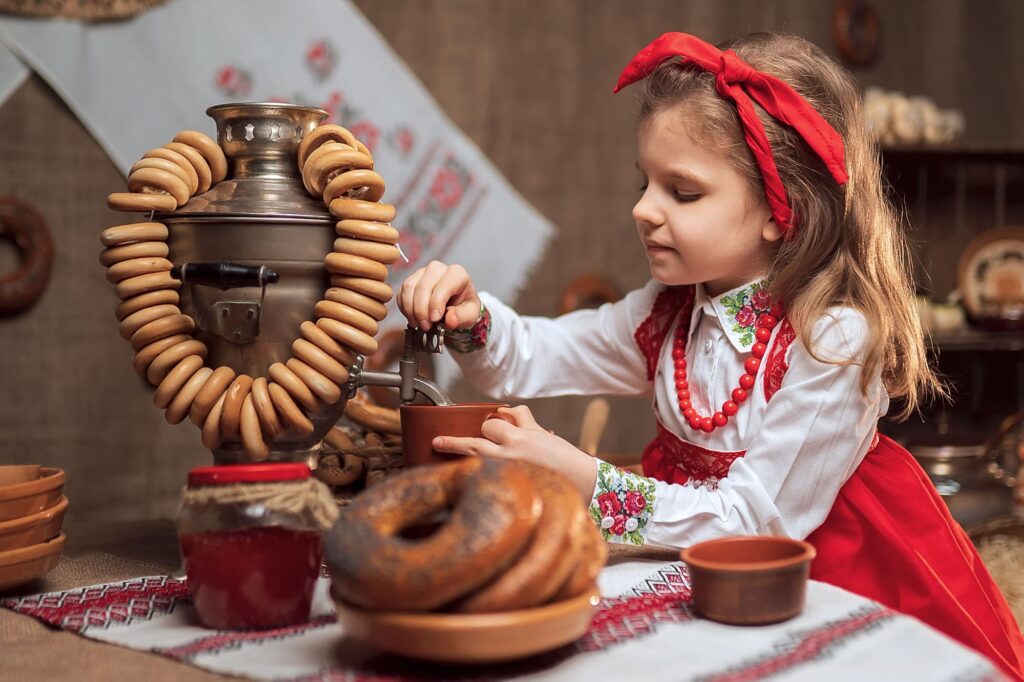
Tea drinking is a separate tradition. The samovar was the center of home feasting for centuries. The whole family gathered around it, jam, baranki (ring-shaped rolls), and pryaniki (gingerbread) were placed on the table. Tea was drunk for a long time, with conversations — there was no rush. If a Russian colleague offers you tea — this is not a formality. This is an invitation to talk.
Pickled cucumbers, sauerkraut, homemade preserves — all of this is part of the Russian culinary code. The tradition of storing provisions for winter is related to the climate: long cold months required supplies. Today this is more a matter of habit, but homemade pickles on the table are still a sign of the hostess’s hospitality.
Banya, Wedding, and Other Everyday Traditions
Russian banya is a phenomenon that does not fit into the concept of a «hygienic procedure.» It is an entire culture with a centuries-old history. In the banya, people steamed with birch and oak veniks (bundles of twigs), doused themselves with cold water, rested, and had long conversations. In Rus, banya was an obligatory part of preparation for important dates — before Christmas, Easter, weddings.
It was attributed purifying power — both physical and spiritual. Before the wedding ceremony, the bride was necessarily taken to the steam room, where her friends washed her hair, sang songs, and cried, bidding farewell to maidenhood. Today, going to the banya together is a common format for informal communication. Business partners often continue negotiations there, in a relaxed atmosphere. If you are invited — this is a sign of serious trust.
Wedding traditions in Russia are an inexhaustible topic. A Russian wedding is not just a marriage ceremony, but a sequence of rituals stretched over several days. Everything began with matchmaking: the groom’s relatives came to the bride’s house, conducted negotiations, and agreed on conditions. Matchmaking was a true diplomatic art — refusing the matchmakers had to be done delicately so as not to cause offense.
After matchmaking, the wedding day was set. In Rus, the best time was considered autumn — after the harvest, when the barns are full and there is plenty to set the table with. The wedding ritual included the «bride ransom»: the groom had to pass a series of humorous tests to prove his worthiness. They bargained for the bride, demanded gifts and treats — all of this was accompanied by laughter and merriment.
At the wedding table, there had to be a karavay — it was divided among the guests, and according to belief, whoever gets the larger piece will have good luck. The celebration included both the wedding ceremony in church and a feast with songs, dances, and toasts. A wedding on Krasnaya Gorka — after Easter — was considered especially auspicious.
Besides banya and weddings, Russian everyday life is permeated with many other traditions. Decorating the home for celebrations is a habit that goes back centuries: fir branches in winter, birch on Trinity, painted eggs in spring. There were many rituals in Rus associated with the home, land, and family — and many of them, albeit in altered form, are still alive today.
How to Account for Russian Holidays When Planning Deliveries
Everything discussed above is not just cultural context. For a foreign partner working with Russia, every holiday period is a potential pause in the business cycle. Knowing the country’s business calendar can help avoid delays, missed deadlines, and unpleasant surprises.
The most critical period is the New Year and Christmas holidays. From December 31 to January 8–9, customs clearance effectively stops. Banks do not process payments, warehouses are closed, managers are unavailable. If the contract involves shipment at the beginning of January — plan for at least a two-week delay. All approvals and payments are better completed in advance, before December 20–25.
May holidays are the second most difficult non-working period. Spring and Labor Day (May 1) and Victory Day (May 9) often combine with weekends, creating two blocks of three to four days. Between them — only a few working days, and many Russians take vacation, turning the entire first half of May into extended holidays. Logistics during this time works intermittently, and procurement planning requires special attention.
There are also less obvious periods. Maslenitsa week and the days around Easter are not official holidays, but activity noticeably decreases — especially in the regions. The same applies to June holidays: Russia Day (June 12) can merge with the weekend and create another long break.
Practical recommendations for foreign partners:
- Request the current production calendar from the Russian side at the beginning of each year
- Build inventory reserves taking into account the January and May downtime
- Add an additional 5–7 days to standard delivery times during holiday periods
- Agree on key contract terms before non-working days begin, not during them
Russia is a country with the richest traditions, and Russians continue to celebrate their holidays with great fanfare. The traditions of the Russian people live in every feast, every ritual, every seasonal celebration. Understanding this rhythm is part of successful partnership. When you know that your colleague is making bliny with family on Maslenitsa, and during Epiphany frosts might be dipping into an ice hole — working relationships acquire a human dimension. And this, as practice shows, is worth no less than a well-drafted contract.The G2R.Asia platform operates without holidays and days off. If you want to find a reliable verified supplier of goods in Russia or order a service, you can entrust the platform to fulfill your order. A client manager will contact you, clarify the details, and provide all the necessary information. The G2R.Asia platform will also help with transaction support at all stages.